
Module 3: Respond
Module 3: Respond
What This Module Is About
In this module, you’ll learn how warmth and firmness can work together rather than against each other.
You’ll explore how emotional validation, pacing, collaboration, and restraint can reduce power struggles and prevent escalation. You’ll also learn why over-talking, over-explaining, and rushing to solve emotions often makes difficult moments harder instead of easier.
Using Elastic Responses and The Silent 10, this module teaches practical ways to stay connected while still guiding the interaction calmly and confidently.
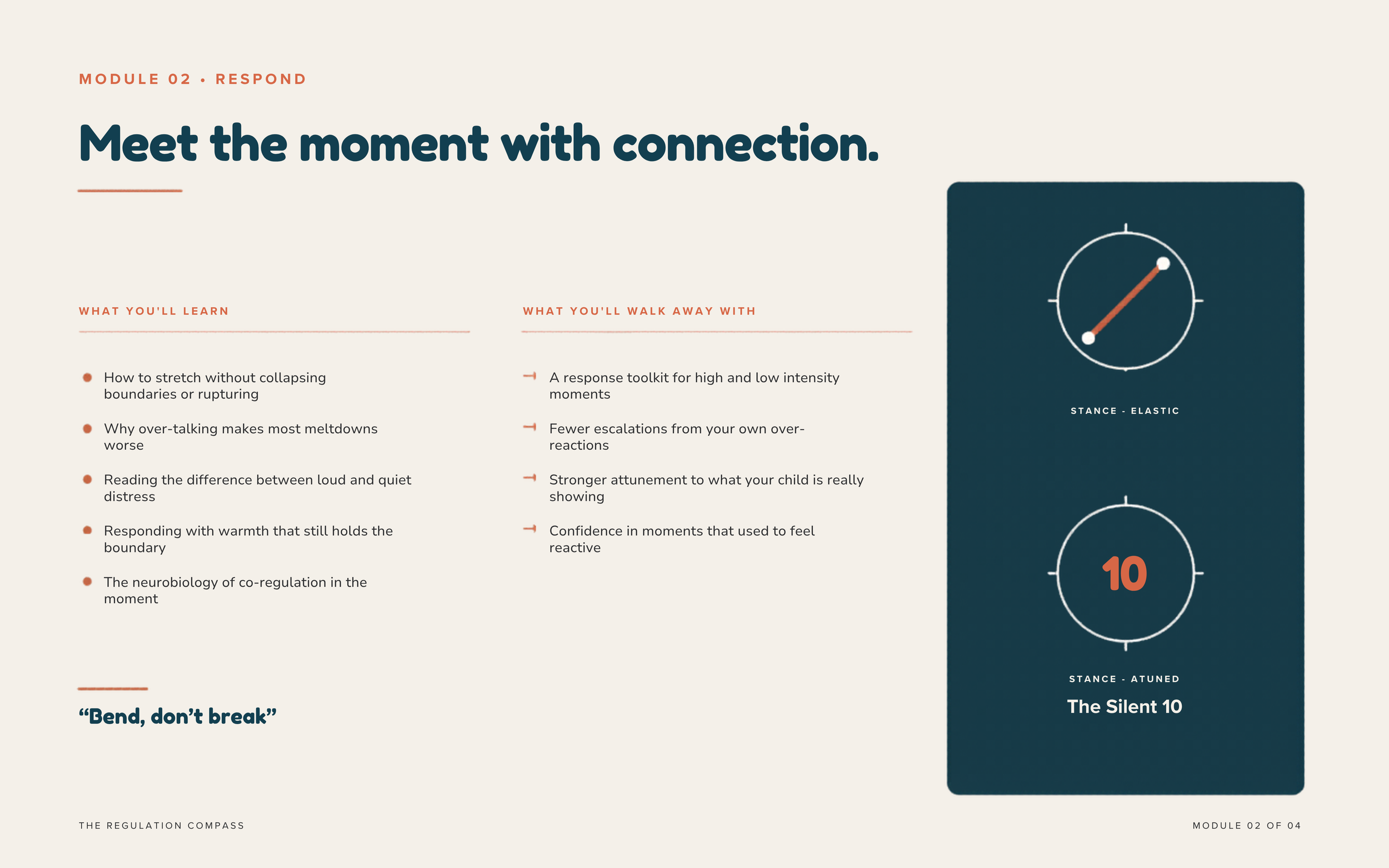
Where You Are in the Compass
You’re now entering the third movement of The Regulation Compass: Respond.
In the previous module, we focused on reducing stress and creating safety through calm leadership, predictability, and boundaries. In this module, we move into the moments where emotions, tension, disappointment, frustration, and conflict are already happening.
Many parents feel pulled between two extremes during these moments. Either becoming too harsh and reactive, or becoming overly accommodating in an attempt to keep the peace. But children often regulate best when adults can stay emotionally connected without collapsing structure.
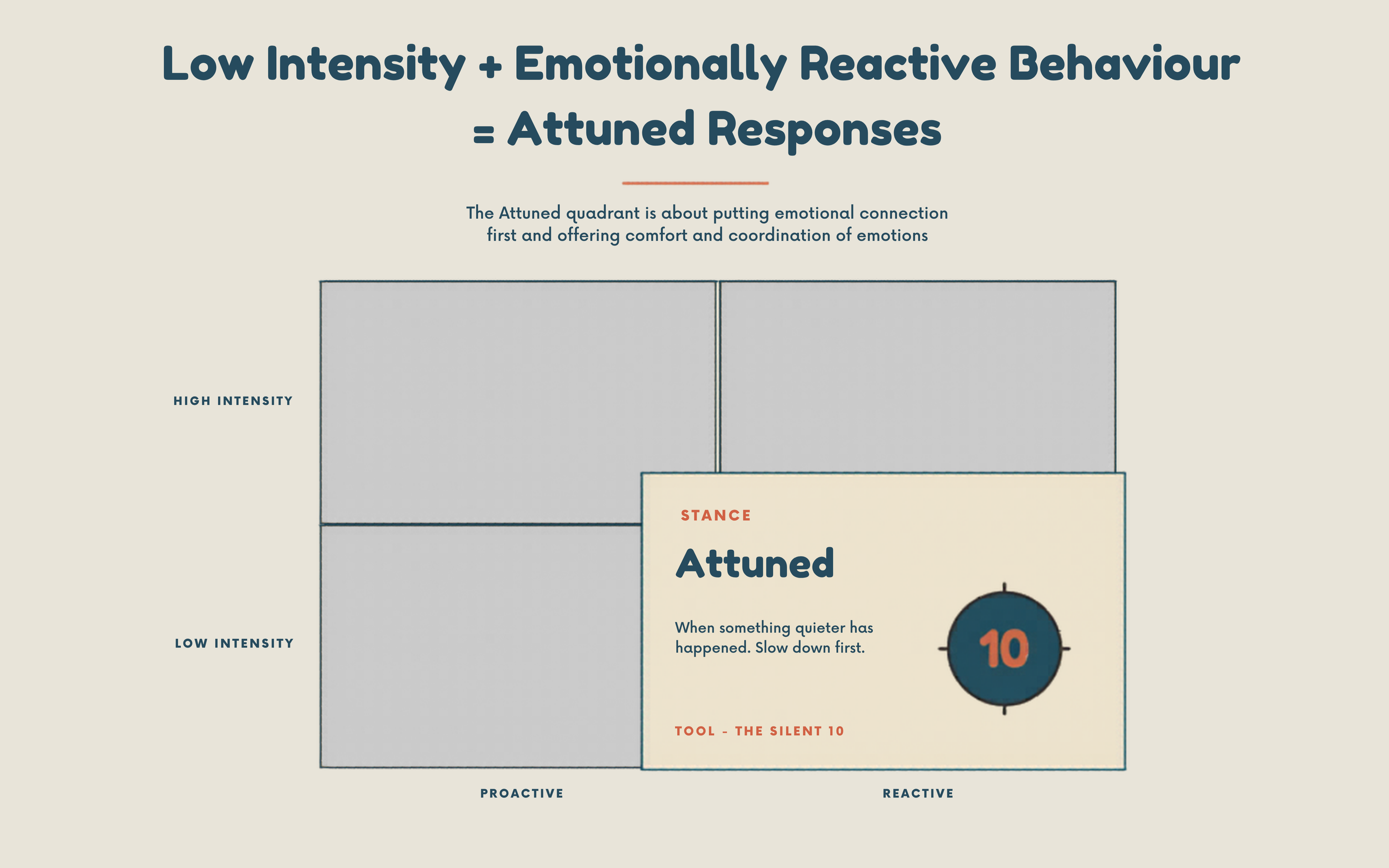
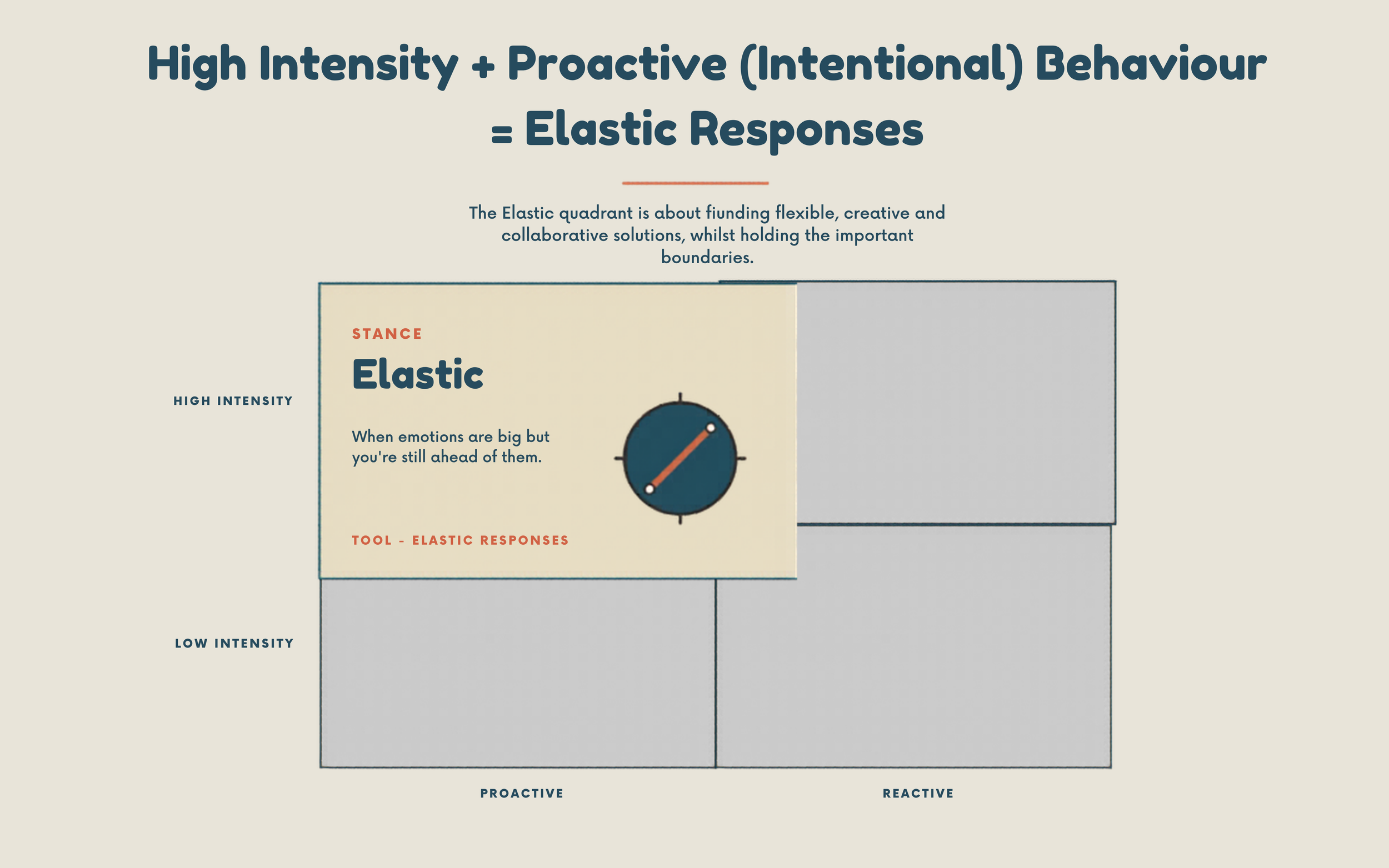
This module is about determining whether you are in the Attuned quadrant, or the Elastic quadrant.
What You’ll Walk Away With
Greater confidence responding to emotional moments without escalating them
Practical tools for balancing empathy, flexibility, and boundaries
A clearer understanding of how pacing, silence, and emotional attunement influence regulation
How To Use This Module
Lesson 1 explores the idea that healthy relationships bend without breaking, and why flexibility and emotional validation matter during manageable emotional states.
Lesson 1.1 introduces Elastic Responses and shows how to remain connected and collaborative without collapsing boundaries or becoming reactive.
Lesson 2 focuses on emotional pacing, validation, and recognising when connection matters more than problem solving.
Lesson 2.2 introduces The Silent 10 and teaches why fewer words often become more effective as emotional intensity rises.
Lesson 3 is an optional deeper dive exploring emotional pacing, collaboration, emotional recognition, and reducing power struggles in more depth.
Ready when you are to start with Lesson 1.